
Quick answer: when this square medium/fine board is the finish tool
We use the Square Acrylic 100/180 for last-stage smoothing when an overlay needs a consistent, ready-to-polish surface. The medium 100 side lets us reduce bulk and clean transition lines; the fine 180 side refines edges and blends tips without over-thinning the overlay. The pack you see here is a soft powder-pink, square hard-board with a visible white core and printed grit markings—handy and familiar at the station.
Standout details that matter at the chair
This file is square-shaped and double-sided, so it sits flat and gives predictable pressure across the nail. The abrasive surface reads as a uniform powder-pink with a slightly deeper rose edge, and the white foam core layer is visible between the two faces. Ruler markings and a printed grit number make repeatable length checks faster. It’s a reusable hard-board that tolerates light washing and routine sanitizing.
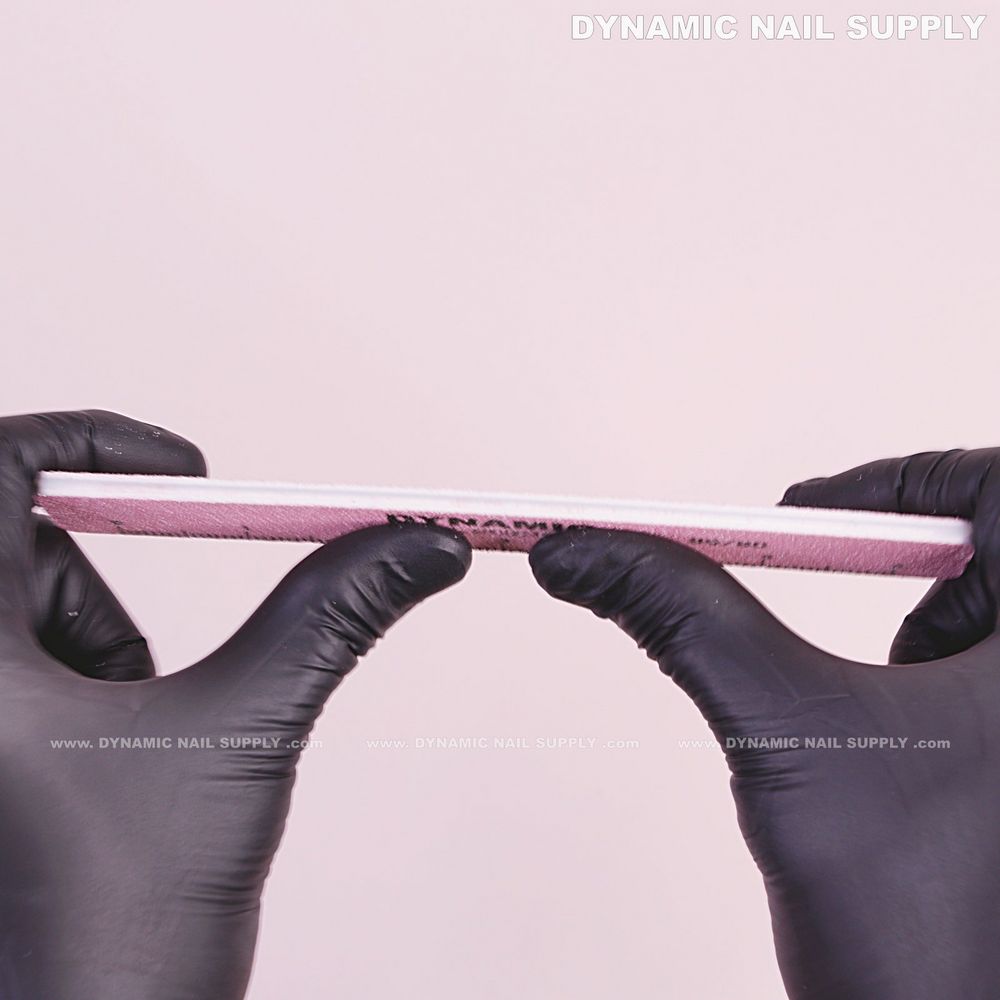
Soft pink square files stacked for easy access.
How it fits a modern at-home or small-salon routine
We think of this tool as the bridge between shaping and polish. After shaping with a coarse tool or trimming bulk, the square 100/180 board helps us transition to finishing without swapping many tools. The 100 side shortens and evens acrylic overlays or builder product; the 180 side smooths the seam, refines the free edge and preps the plate for polish or gel. It’s compact enough for a travel kit and looks tidy stacked in a soft-pink pile on the station.
Step-by-step: square nail file finishing in four focused moves
- Seat and view: Sit with the client’s hand supported on a flat surface and good light. Hold the file flat to the nail when you want uniform removal and tip blending.
- Use the 100 grit for transition shaping: With light, steady strokes, run the 100 face across the overlay near the tip and seam to bring thickness down. Focus on the high spots only—move across the nail rather than rocking the file on a single point.
- Flip to 180 for edge and surface refinement: After the seam looks even, use the 180 face to soften any harsh ridges and refine the free edge. Short, controlled passes create a consistent surface without removing too much product.
- Final check and prep: Work nail-by-nail under your light, checking from different angles. When the surface reads smooth and the tip edge is consistent, feather the last few strokes with the 180 to remove visible scratches before wipe and polish.
Three quick ways we use this pink 100/180 square board
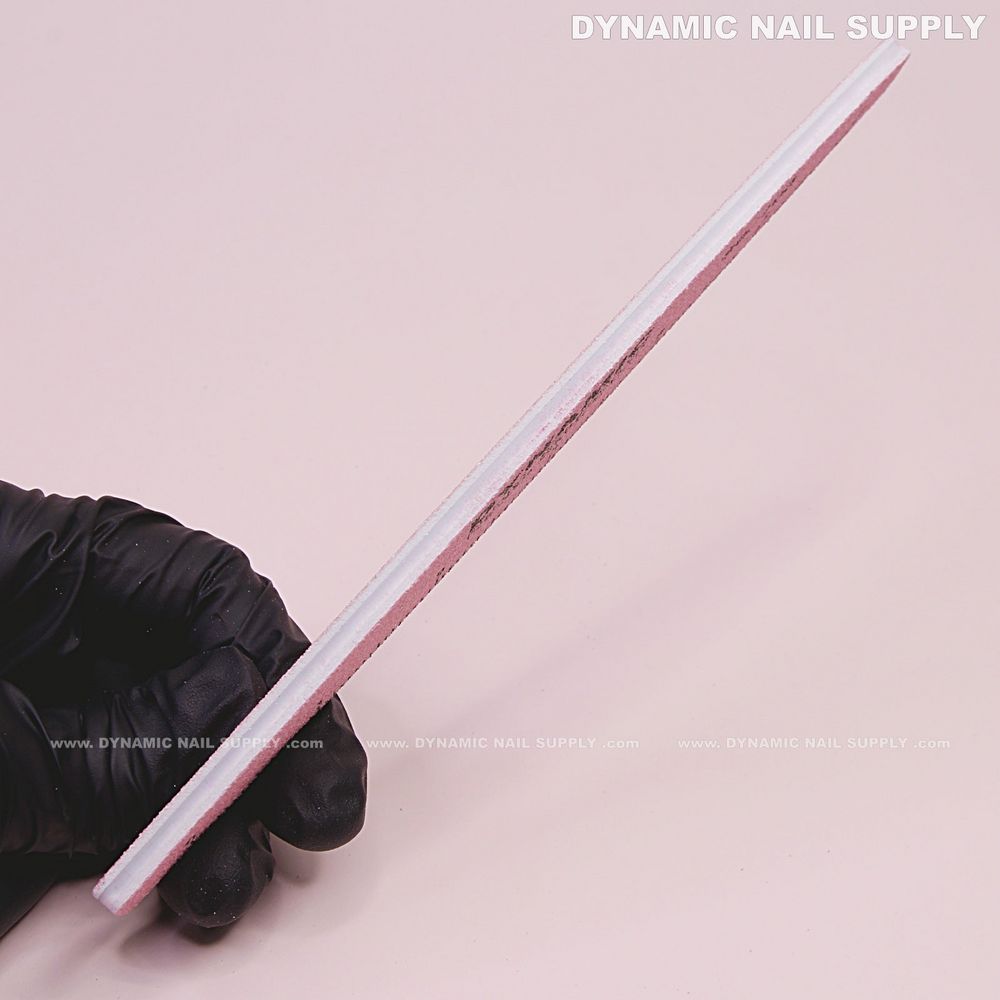
Double-sided medium/fine abrasive with visible white core.
- Refine tip-to-overlay seams: Hold the file flat and glide the 180 across the seam until it visually disappears; small strokes help prevent over-thinning.
- Consistent free-edge shaping: Use the square corners for straight edges on square or coffin shapes, keeping the file at a low angle for control.
- Pre-polish smoothing: Finish the set with light 180 passes across every nail to create an even surface ready for base coat or gel.
Common mistake: Rushing the switch. Staying too long on the 100 side causes over-thinning and visible gouges; flip to the 180 as soon as transitions look even.
Care, handling and sensible safety notes
Store files flat to keep the edges true. The hard-board build stands up to light washing; allow files to dry completely before reuse. Avoid aggressive, high-pressure filing on a single spot—this tool removes material efficiently and repeated heavy strokes can thin acrylic too far. For hygiene, sanitize according to your local protocols between clients.
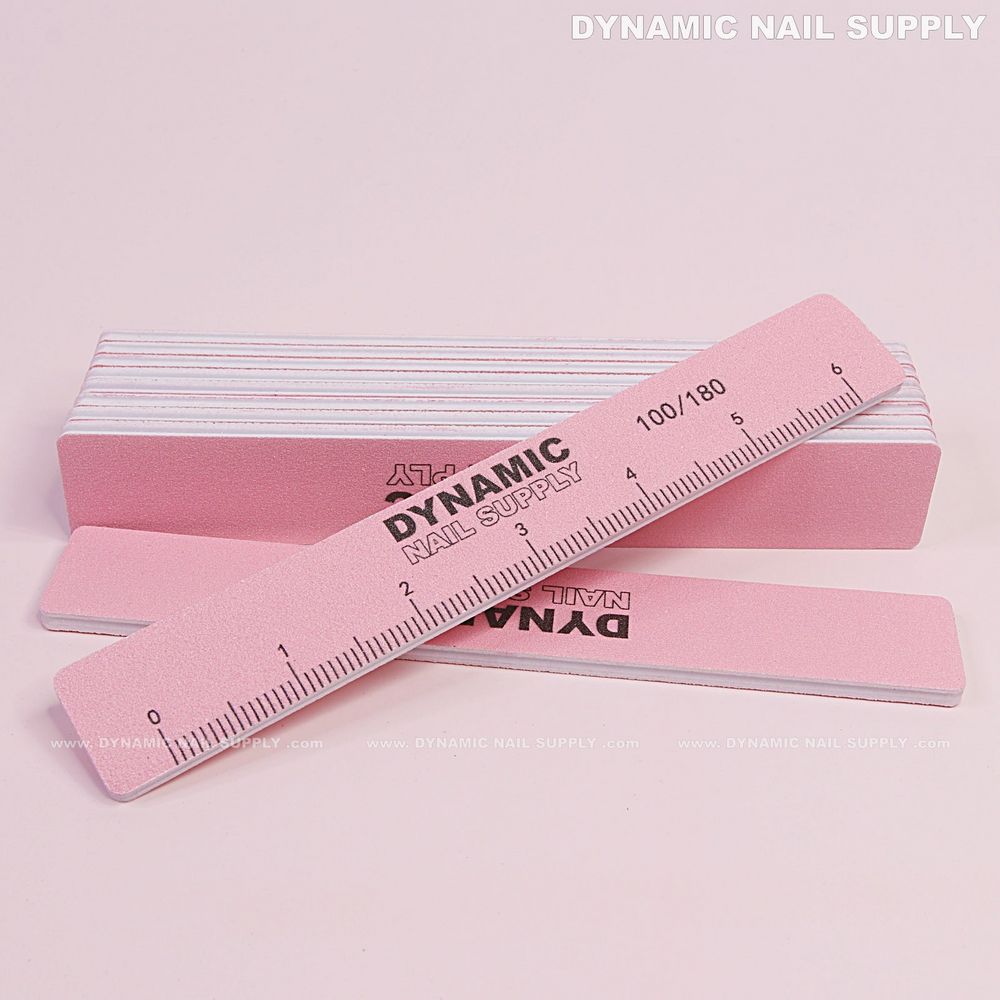
Printed grit markings and ruler details for repeatable length.
Finishing thoughts and a final pro tip
For a clean, repeatable finish we like the Square Acrylic 100/180 because the medium/fine combo covers both reduction and prep without extra tool swaps. It’s tactile, visually cohesive at the station in its soft pink palette, and stacks neatly when you keep multiples on hand. The pack is priced around $6.99 but prices may change.
Final pro tip: when you feel a rough edge after the 180 pass, don’t press harder—flip the file and use lighter strokes to remove the roughness. If you want to compare this tool’s performance in your setup, consider trying the Square Acrylic 100/180 for repeatable, salon-style results and keep the rest of your finishing steps minimal for a consistent polish-ready surface.
If you want a reliable double-sided board for repeatable finishing, try the Square Acrylic 100/180 and see how it fits your workflow Square Acrylic 100/180.
