
Quick answer first: we can clean dual head gel brush tools like the [Brush0007] Spatula without damage by limiting liquid exposure to the wood, using targeted solvents on metal and bristles, and drying each end separately. That keeps the warm wood brown handle, matte spatula blade, and amber bristles looking and working their best.
Keep the tool usable longer by protecting the wooden center
This dual-ended liner and spatula has a visible wooden center handle stamped with DYNAMIC and black caps that slide over each tip. The wood is a design feature, not a waterproof part. To preserve the wood grain and prevent swelling or discoloration, we never soak the whole tool. Instead, we hold the wood away from cleaners and treat only the ends. Wiping the handle with a barely damp lint-free wipe after heavy use is fine; avoid long baths, ultrasonic cleaning, or leaving it in sanitizer buckets.
Remove cured gel and sanitize metal and bristles safely
Start by scraping off any cured product from the matte steel spatula blade with a separate disposable pusher or file—do this dry so you don’t push solvent into the ferrule or wood. For the brush end, gently pick at hardened bits with the spatula tip (used carefully) or a wooden toothpick. Then follow with a short, targeted clean: dampen a lint-free wipe or cotton pad with isopropyl alcohol and wipe only the metal spatula and the brush ferrule and bristles. Avoid running alcohol down the handle. If you prefer an acetone-free brush cleaner, use the same targeted-wipe approach.
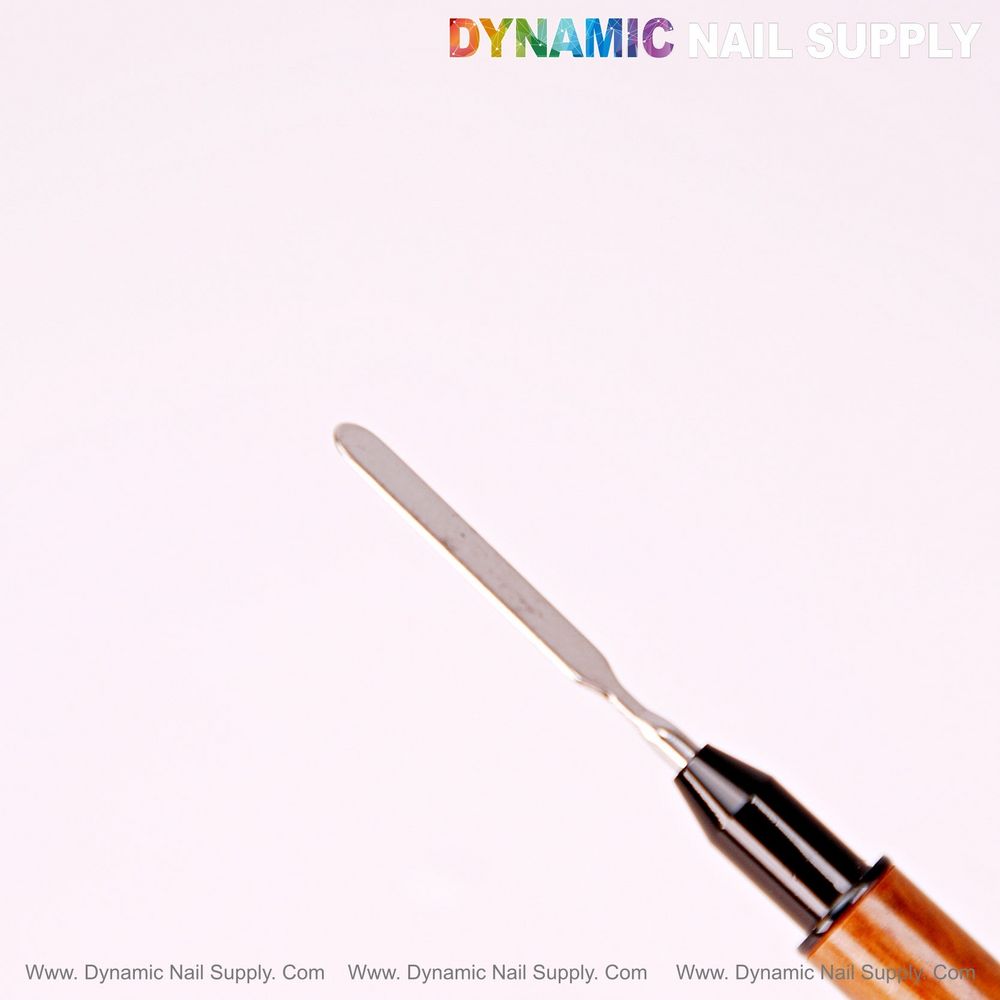
Dual-head tool shown diagonally on pale blush backdrop.
Common mistake: soaking the whole tool in alcohol or acetone. That can loosen ferrules and ruin the wooden handle.
When you need to disinfect after client work, wipe the metal and bristles with a 70% isopropyl alcohol wipe or cloth and allow those parts to air dry facing away from the wood. Do not expose wet bristles to active LED/UV lamps; residual product can harden bristles over time.
Simplify your routine with a gentle shape and condition step
After solvent cleaning, reshape the oval brush tip while damp by stroking the bristles into place with a drop of slip solution or alcohol on a lint-free wipe, then pat gently. If stray hairs appear at the ferrule, trim them with small scissors rather than pulling. For the spatula head, once cured debris is removed, polish the matte blade with a dry cloth to keep its textured finish clean and nonstick.
Midway through a service, we sometimes need to freshen the tool quickly: wipe the spatula blade clean, dip the brush tip briefly into slip solution, and wipe excess on a paper towel. This short fix keeps workflow smooth without soaking wood or spending time on a deep clean.
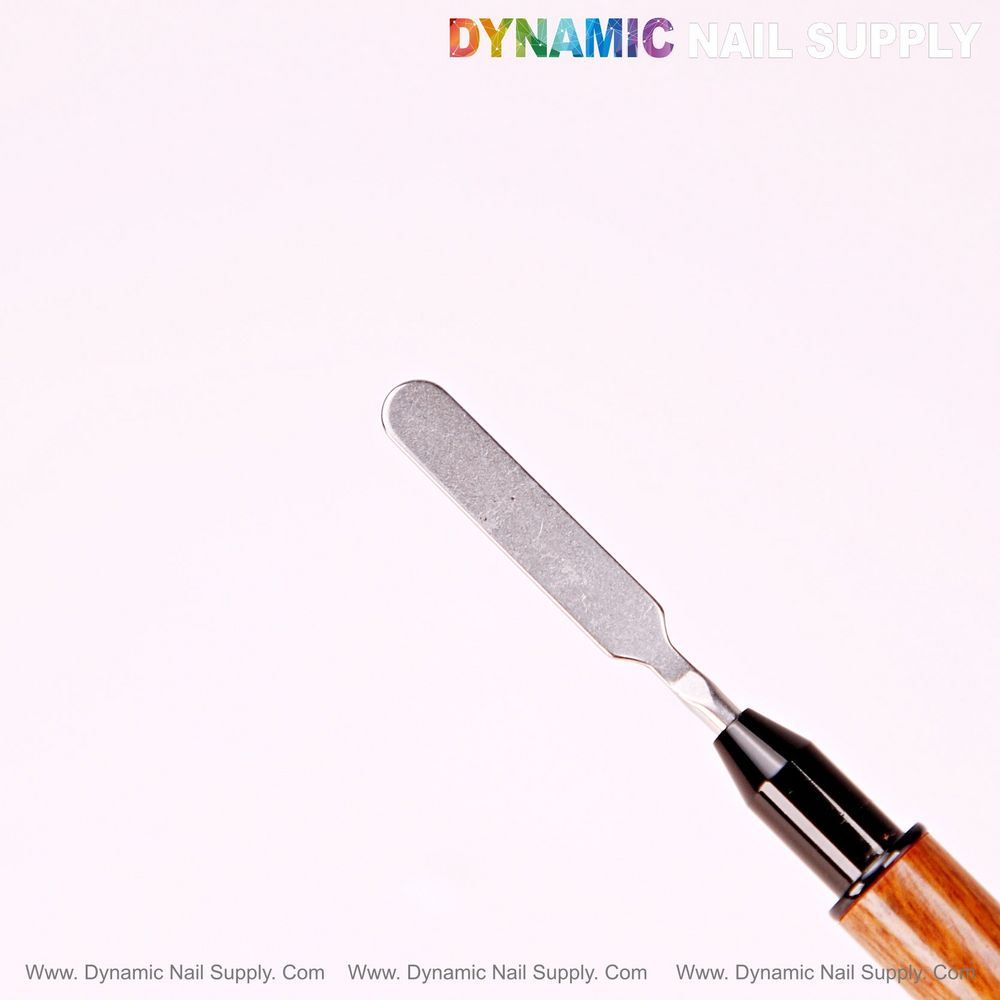
Warm wood handle contrasts with black caps and metal spatula.
If you own this exact variant—the [Brush0007] Spatula with its warm wood handle, black caps, matte steel spatula, and amber bristles—you’ll notice the different finishes need different handling; glossy caps can be wiped quickly, matte metal benefits from a dry polish, and the wood wants only light moisture. We find that keeping a small station bag with spare caps and a lint-free cloth helps us protect each finish during cleaning.
If you plan to keep this tool in your main kit, we recommend a regular targeted clean for the Dual Head Gel Brush to protect the wooden handle and bristles.
How this tool fits a modern at-home routine
We recommend this dual-ended liner and spatula for DIY fans who value a minimalist, efficient kit. Its two-in-one design reduces clutter and shortens session time, but the wooden handle means you must follow a conservative sanitation routine. With the steps above, you can use it for PolyGel or builder gel work, trims and bead placement, and clean finishing without risking the handle or bristles.
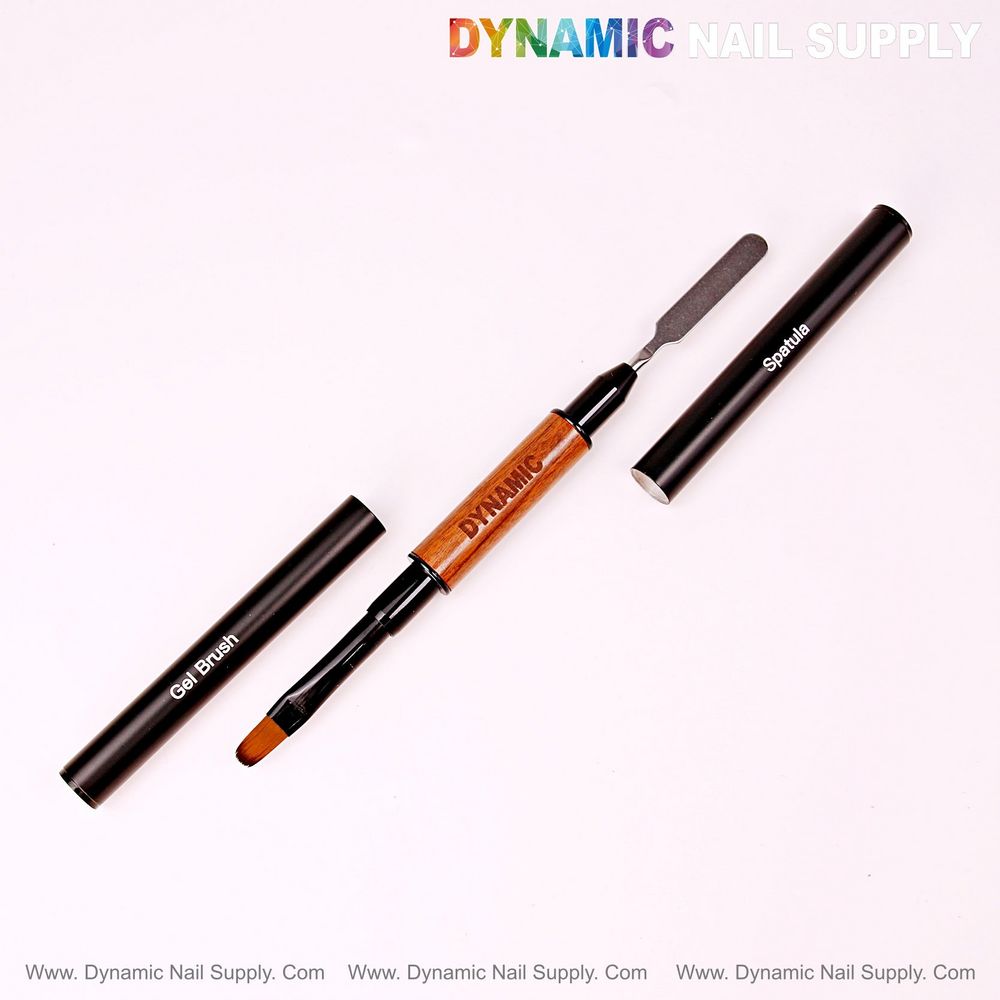
Ready for salon use: brush tip and stainless spatula visible.
Three quick ways we use this tool in the salon and home set
- Fast sculpt and press: Slice a bead with the spatula, place on the dual form, then smooth with the oval brush using slip solution. Clean only the tip between nails.
- Spot repair and pick-up: Scoop a tiny amount of product with the spatula for quick fixes, then wipe the spatula clean and refresh the brush with a short alcohol wipe.
- Precision lining: Use the narrow oval brush edge to refine sidewalls and cuticle area. After a set, remove residue with targeted wipes—no soaking.
Price note: this style is affordably priced and may change over time, so consider that when stocking your kit.
Final pro tip
Store the brush capped, bristles facing up or horizontal, and never leave the brush wet under lamp light. A final quick wipe of the ferrule and spatula after each client keeps corrosion and cured buildup away and keeps the wooden handle looking warm and intact.
